


Reframing Space and Perception: An Interview with Sharon Yaoxi He
Published Jun 24, 2025
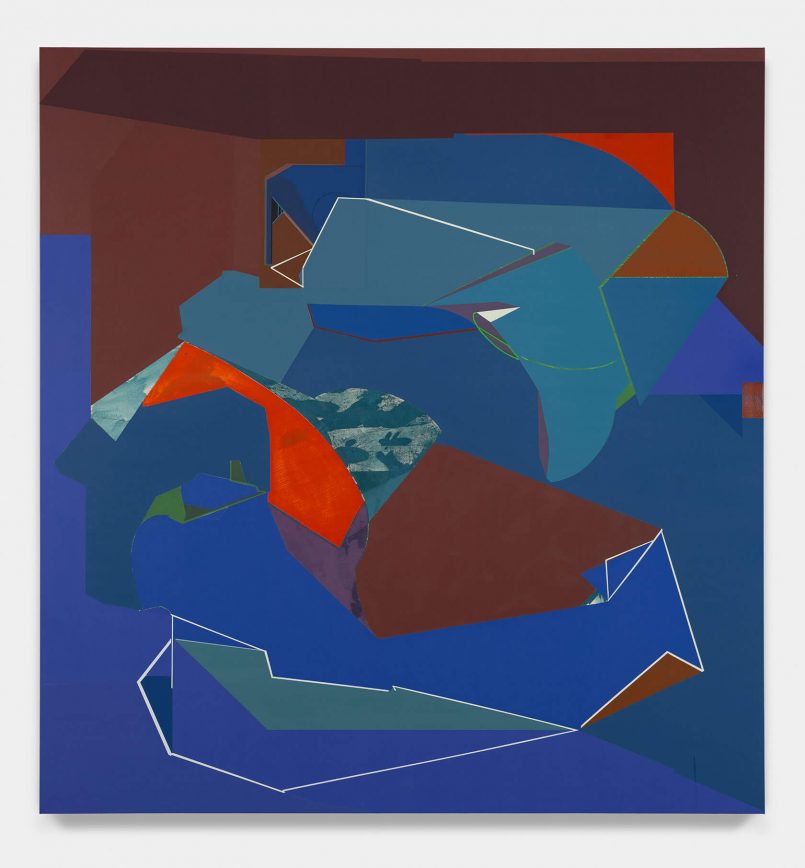
Born in China and now based in New York and New Jersey, Chinese-Canadian artist Sharon Yaoxi He creates paintings that dissolve the boundaries between space, emotion and perception.
Drawing on both Eastern and Western visual traditions, from the atmospheric landscapes of classical Chinese painting to the philosophical inquiries of Kant, Sharon has developed a unique visual language that resists fixed perspective and linear logic.
Her abstract compositions immerse viewers into fluid, psychological landscapes shaped by shifting viewpoints and layered color relationships. Rather than relying on rules or external reference points, her work emerges from within, guided by emotional resonance, perceptual experience, and a willingness to embrace uncertainty.
Ahead of her upcoming duo exhibition at Thomas Erben Gallery in Chelsea, we spoke with Sharon about her evolving process, the influences behind her intuitive approach, and the new, more vulnerable territory she’s exploring in this latest body of work.
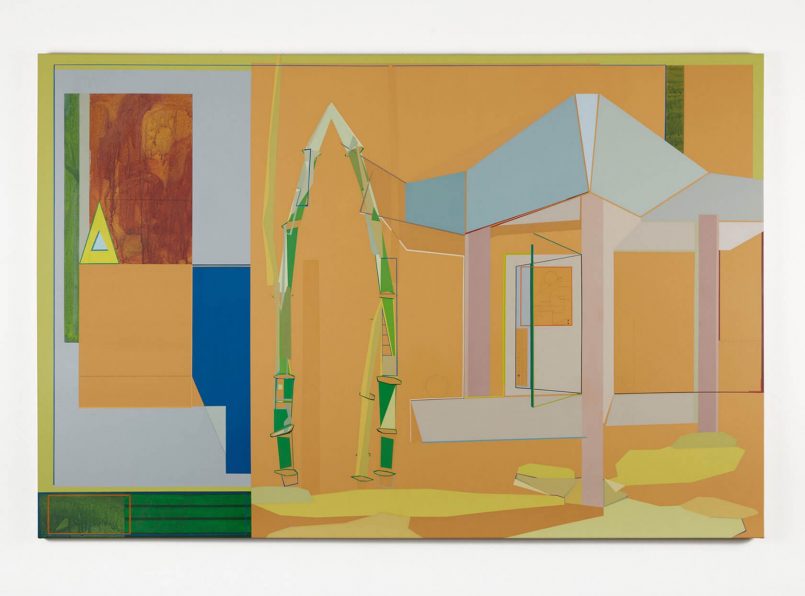
IG: Let’s start with your upcoming exhibition at Thomas Erben Gallery. What can you tell us about the work you’ll be showing?
Sharon: I will be showing four paintings. This new body of work is probably the freest I’ve ever been – but also the most struggling. The process was entirely intuitive and physically engaged. I rotated the canvases constantly, letting the paintings evolve without a fixed orientation or direction. It was more about movement—internal and external—and about responding in real time to what was in front of me. What it really means to be subjective, especially in terms of material and structure.
IG: Much of your practice centers around space as a psychological and perceptual experience. When did you first become interested in exploring these ideas through painting?
Sharon: I’ve always been drawn to space—what is space, how it’s constructed, how it holds us, and how we move through it. Early on, I was deeply influenced by Bauhaus architecture, interior design, and furniture. I was fascinated by how form could be both functional and emotional—how a chair, a line, or a layout could shape your experience of a room.
At the same time, I was exploring abstraction—especially geometric abstraction. I would take photos every day, observing structures around me, and then translate them into abstract forms as a way to find my own language. Over time, I realized that when you strip everything in a space down to its most essential form, what you’re left with is geometry: point, line, and shape. That realization was a turning point.
Eventually, I moved away from representation entirely. I stopped trying to depict external spaces and started painting what I call “mindscapes”—spaces I imagine myself walking through in my own head. It became a way of understanding who I am. These paintings are no longer about what I see outside, but how space feels and unfolds internally, psychologically, even subconsciously.
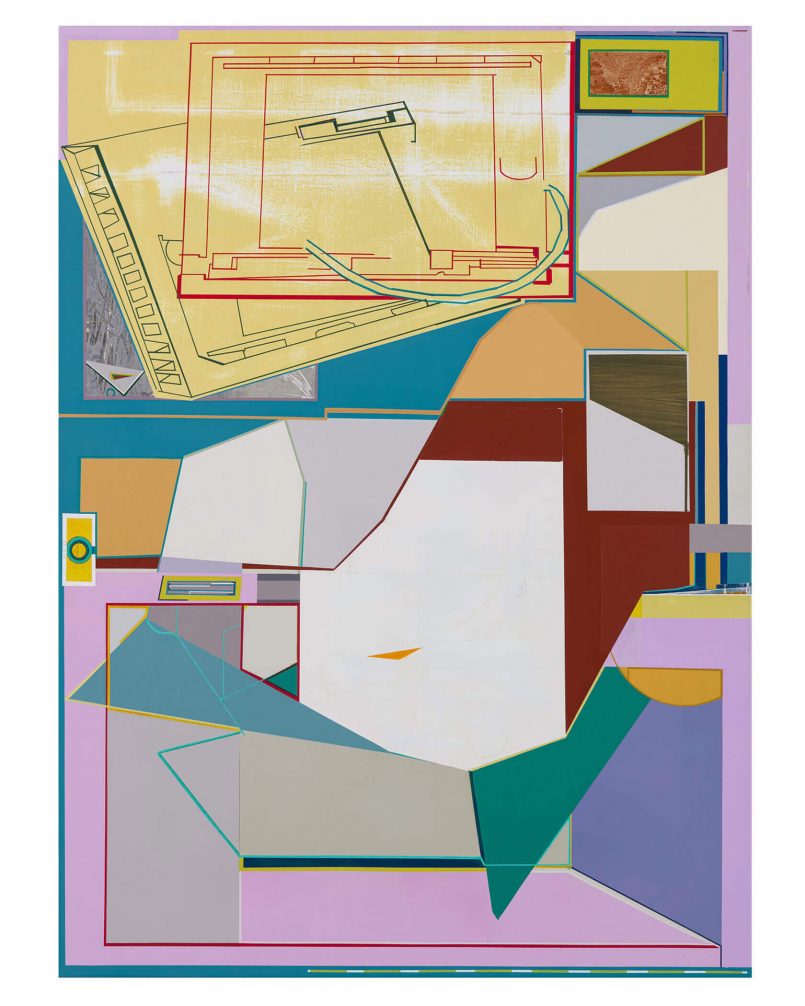
IG: Your compositions often resist single-point perspective, opting instead for layered viewpoints and multiple vanishing points. How did this approach develop? Was it a gradual shift or a conscious decision?
Sharon: At a certain point, I realized I didn’t want my paintings to feel still—I wanted them to move, to breathe. But I struggled with how to make that happen. The breakthrough came during my MFA, when I took a class on ancient Chinese landscape painting. I spent a lot of time analyzing those works and became fascinated by how they construct space—not through a fixed perspective, but through atmosphere, time, and layered viewpoints.
That visual language really stayed with me. It allows the eye to travel through shifting depths and fragmented planes—less about arriving at a destination, more about experiencing a rhythmic journey. I began to think of perspective as something subjective and unfolding, not locked into a single glance.
But even after I understood that, I couldn’t always apply it. I was trying too hard. Once I let go of overthinking and trusted the process, the space naturally opened up. It felt layered, intuitive, and alive. That was a turning point.
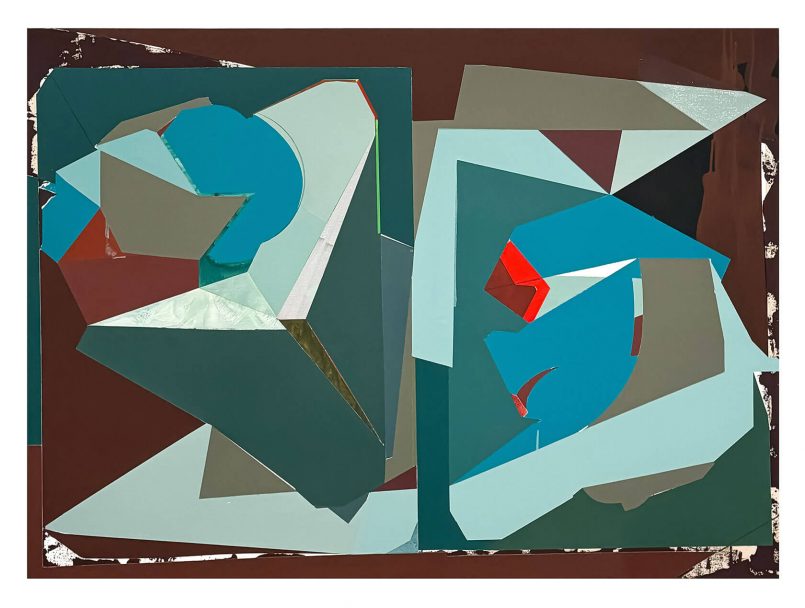
IG: You’ve mentioned drawing inspiration from both Kantian philosophy and classical Chinese landscape painting. How do these seemingly different traditions come together in your work?
Sharon: Both Kantian philosophy and classical Chinese landscape painting fundamentally challenge the notion of space and time as objective, fixed entities. Kant’s critical philosophy argues that space and time are a priori forms of intuition. This conception foregrounds the subjectivity of perception and the idea that spatial and temporal understanding is necessarily mediated through cognitive faculties.
Classical Chinese landscape painting operates within a parallel epistemological framework. Rather than depicting an external reality through linear perspective, it constructs spatiality as an experiential and temporal process. It is very imaginative. The use of multiple, shifting viewpoints and a layered pictorial space reflects a non-linear, phenomenological understanding of landscape—space is relational, temporal, and intrinsically linked to the viewer’s movement and meditation.
These ideas come together in my work through a visual language that resists fixed perspective and embraces fluidity. Kant gives me a philosophical grounding, while Chinese painting offers a compositional strategy. Together, they allow me to explore space as something psychological, atmospheric, and evolving—something you don’t just see, but experience.
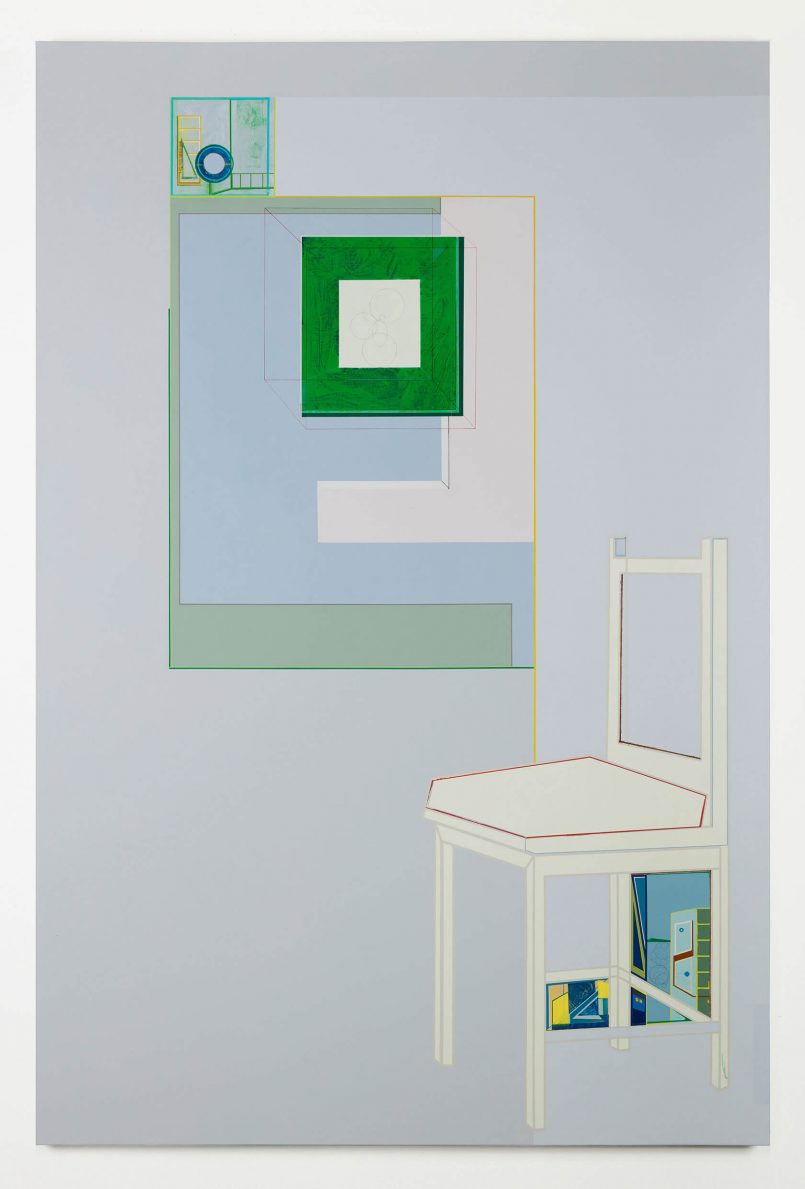
IG: Can you walk us through your painting process? Do you usually begin with a particular color palette, a mood or a spatial idea?
Sharon: I usually begin by looking around the room and finding a thing that catches my attention—it could be a small object, a shape, or a color. That first impulse becomes a kind of entry point. Everything that follows is intuitive and responsive.
Letting the painting reveal itself over time.
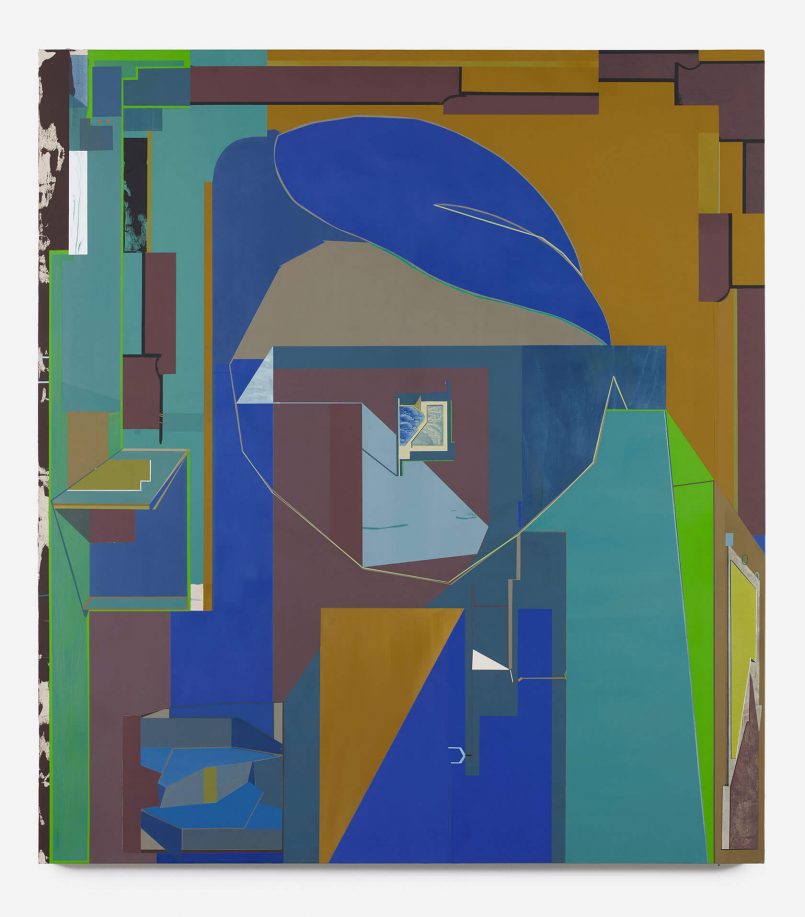
IG: You’ve described your new body of work as a kind of letting go. More vulnerable, less guided by rules or reference points, and entirely constructed from within. What has it felt like to embrace that kind of openness in your practice? Has it changed how you connect with the work emotionally?
Sharon: Embracing that openness has definitely been both liberating and challenging. I’ve realized that I can’t stay constantly focused on a painting without stepping back. I need to walk away from it, slow down, and take breaks—usually every few days—so I can return with fresh eyes and a clear mind.
If I try to work on it every day without pause, I get overwhelmed emotionally and can’t respond honestly to what the painting needs. Taking that space allows me to be more relaxed which helps me connect more deeply and intuitively with the work. It’s a process of patience and self-care that ultimately makes the vulnerability in the work possible.
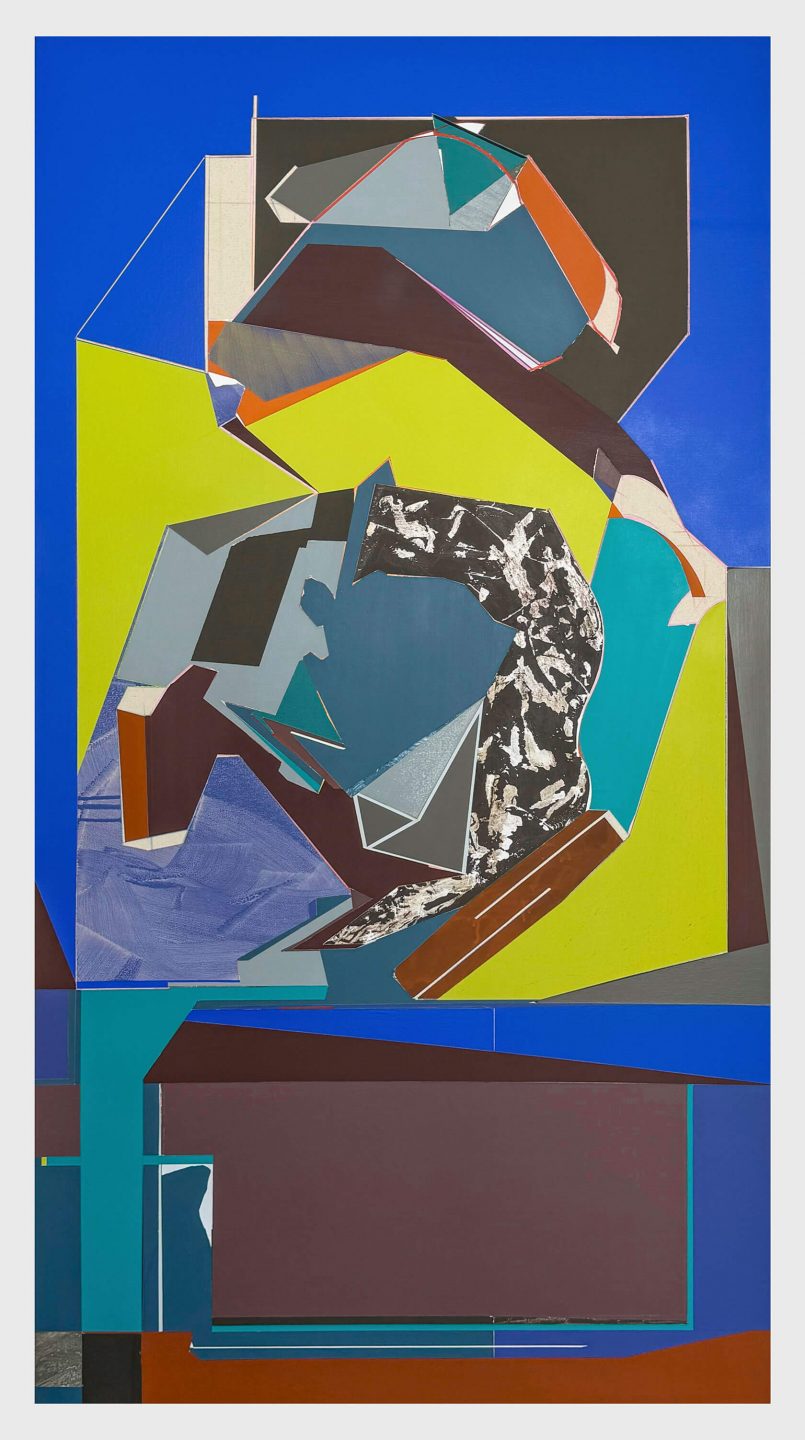
IG: Your paintings seem to invite viewers to “lose and find themselves” within the work. What kind of experience do you hope people walk away with after spending time in front of one of your pieces?
Sharon: Honestly, I don’t have specific expectations for the viewer. I think each person brings their own history, feelings, and perceptions to the work, so their experience will always be unique. If it opens up a moment of curiosity, calm, or emotional resonance, that feels meaningful. But ultimately, I want the work to exist independently of any prescribed meaning, letting each viewer find their own way inside it.
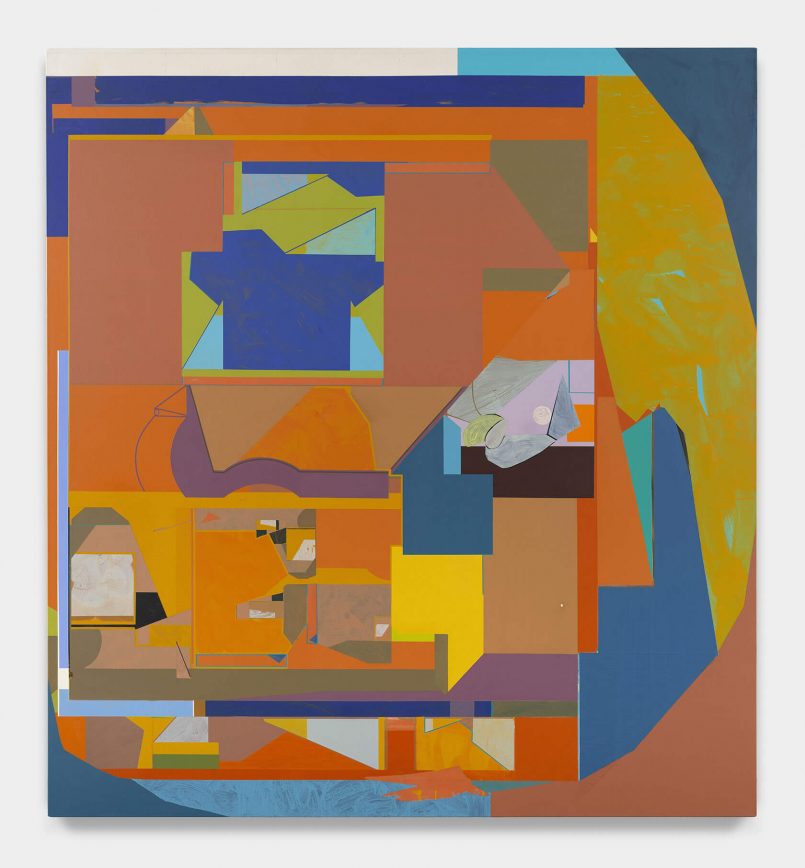
IG: You were born in China, lived in Canada and are now based in New York and New Jersey. How have these different environments shaped your understanding of space and perception, both in life and in your work?
Sharon: Moving between these very different places has deeply shaped how I think about space—both physically and psychologically. Growing up in China and then Canada exposed me early on to contrasting ways of experiencing the world: from dense, urban spaces to wide-open, multicultural environments.
Living in New York and New Jersey adds another layer—fast-paced, diverse, and constantly shifting. These transitions taught me that space is never fixed; it’s always changing depending on culture, context, and how we move through it.
In my work, I try to capture that fluidity—space as something subjective and evolving, not static or universal. My paintings reflect a psychological experience of space shaped by memory, identity, and the movement between different worlds.
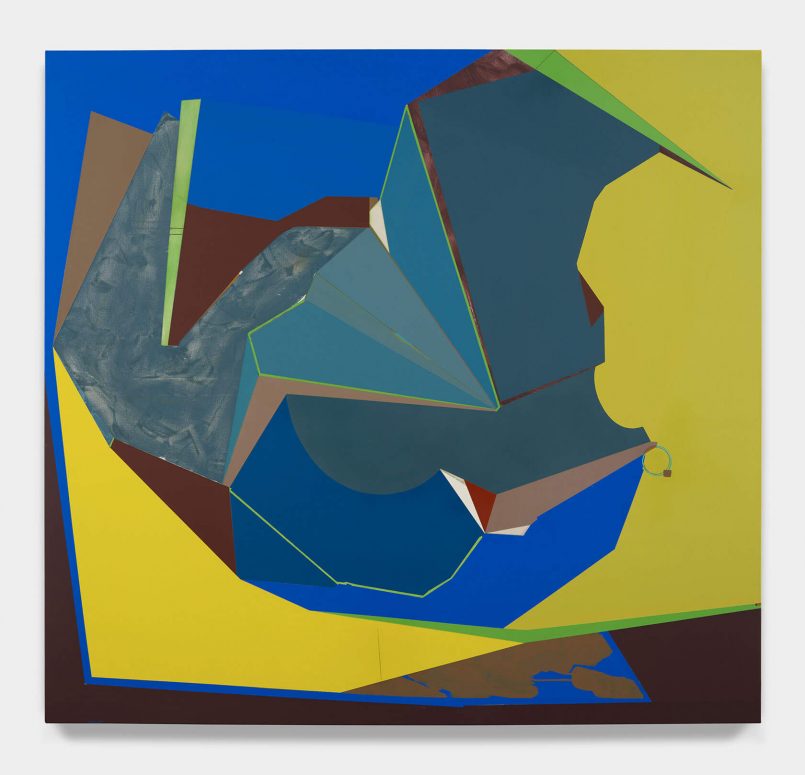
IG: Looking ahead, are there any themes or directions you’re excited to explore next in your practice?
Sharon: For me, it’s really about staying in the flow of painting—keeping my hands moving and my mind open. I don’t want to force ideas or themes; I want to keep listening to what the process itself wants to show me. The next steps come through the act of painting, almost like a conversation unfolding on the canvas.
IG: To wrap things up, what continues to keep you curious and motivated in your work today?
Sharon: Honestly, it’s just the act of painting itself. That feeling when I’m totally relaxed and then finish a painting that I’m actually happy and satisfied with—it’s the best. Sometimes I even look at the paintings and think, “Wait, how did I make this?” That little bit of surprise keeps me excited to keep going.

Sharon Yaoxi He’s upcoming duo exhibition opens June 26, 2025, at Thomas Erben Gallery in New York, offering a powerful glimpse into her evolving exploration of perception, space and emotion. To learn more about her work, visit her website and follow her latest updates on Instagram.






More
articles
Inspiration
in your inbox
Amazing art & design, never any spam.
We care about protecting your data. Please refer to our Privacy Policy for more.

- Advertising
- Architecture
- Art
- Branding
- Fashion & Beauty
- Gaming
- Graphic Design
- Illustration
- Industrial Design
- Interior Design
- Logo Design
- Packaging Design
- Photography
- Pop Culture
- Print Design
- Product Design
- Technology
- Typography
- UX & UI Design
- Vehicle Design
- Video & Motion
© 2026 Inspiration Grid, all rights reserved. Some of our posts may contain affiliate links to partner brands. We earn a small commission if you click the link and make a purchase. There is no extra cost to you, so it’s just a nice way to help support the site. All images, videos, and other content posted on the site is attributed to their creators and original sources. If you see something wrong here or you would like to have it removed, please contact us.