


Uncovering the Invisible: An Interview with Kasia Muzyka
Published Aug 14, 2025
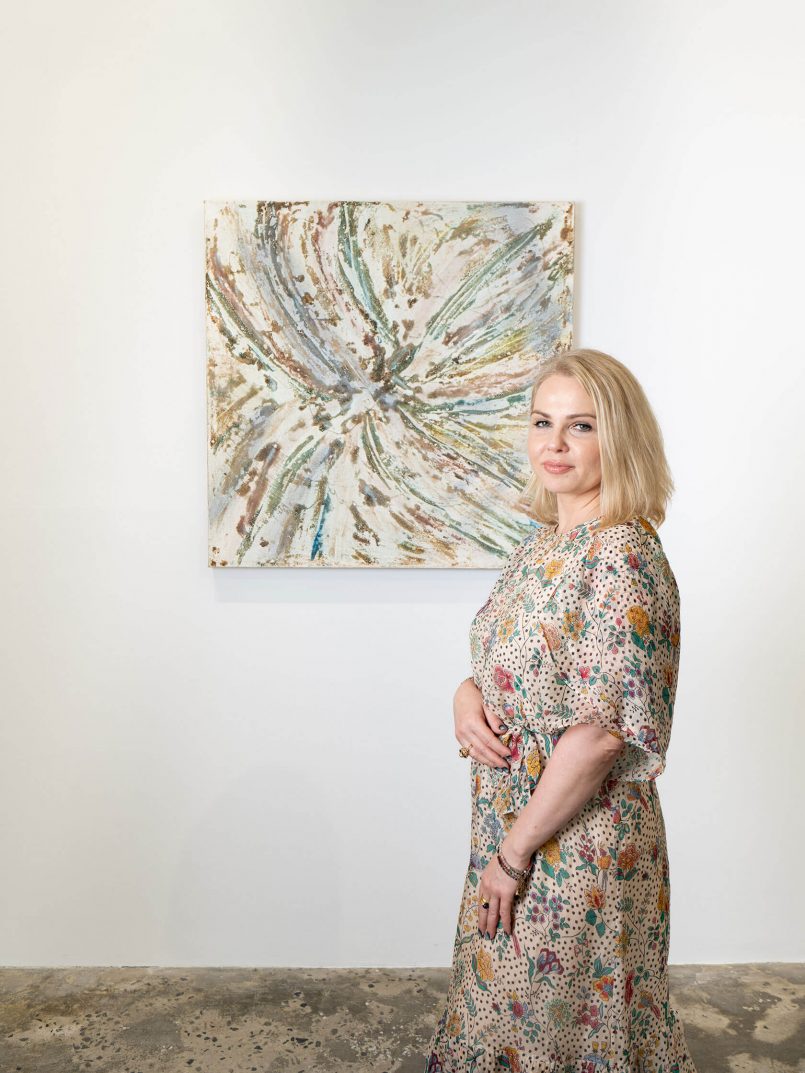
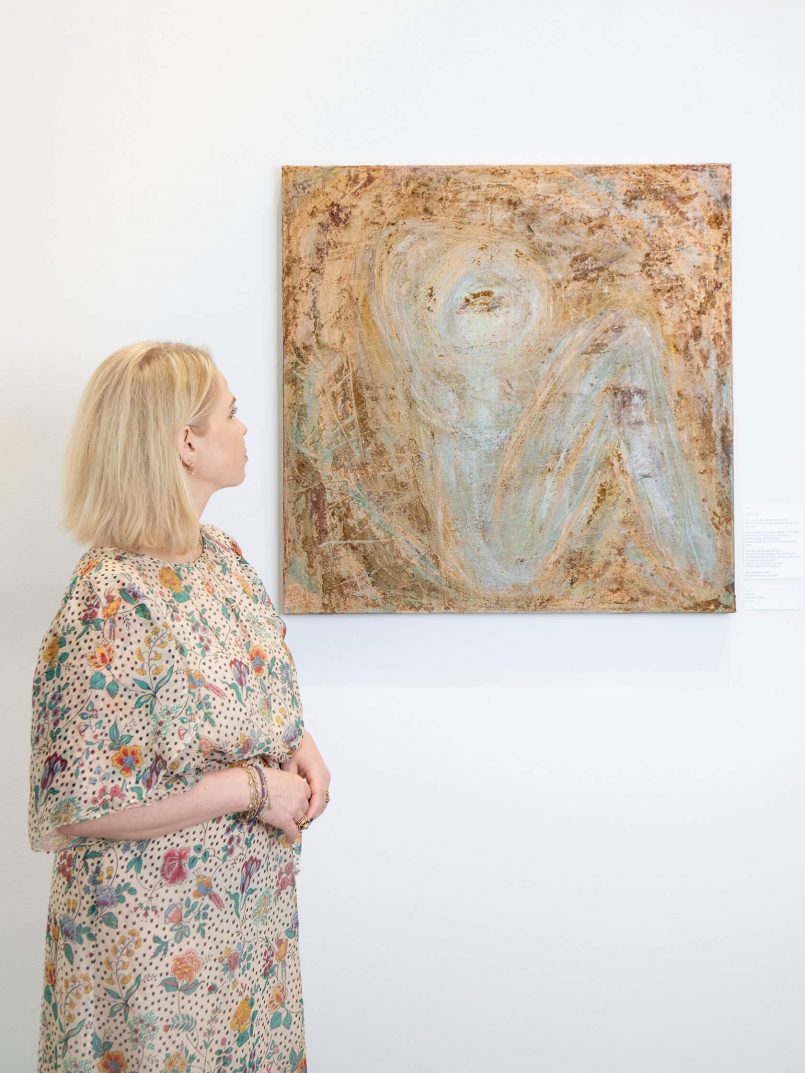
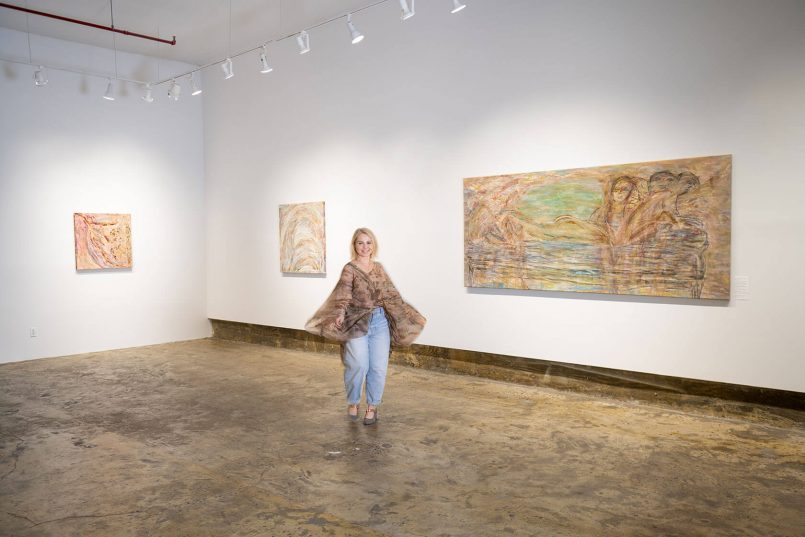
Polish-American artist Kasia Muzyka’s recent solo exhibition The Sacred Condition of Being, presented in Chelsea this June, invited visitors into a world where art is more than an image, it’s a living presence.
Cover image: Shweta Bist
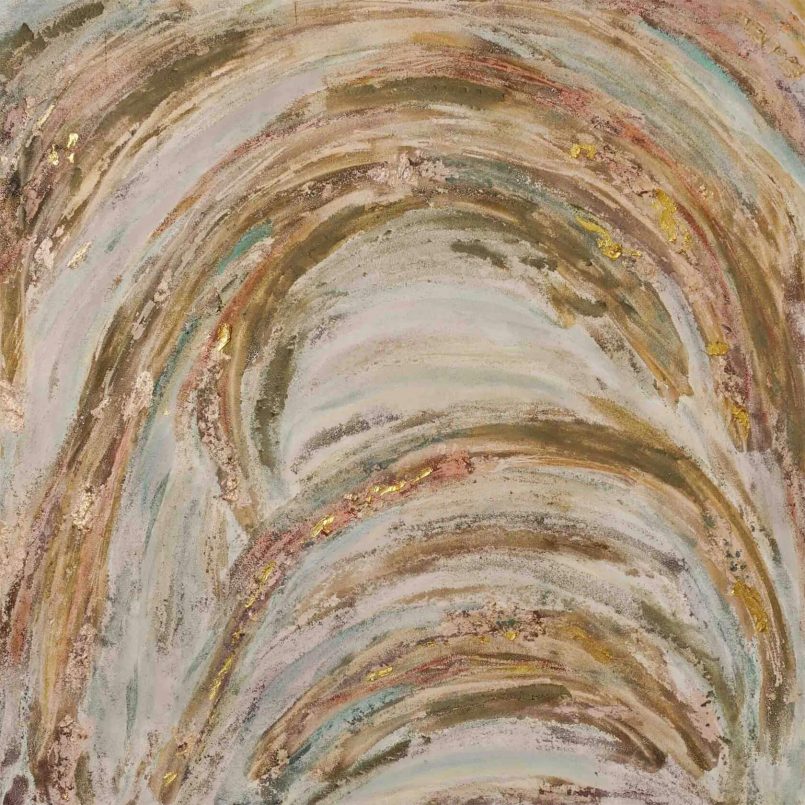
Blending natural materials like wine, coffee, earth pigments, and vibrational water, Kasia approaches painting as ritual, uncovering works she describes as “portals” into origin, memory and transformation.
Rooted in mysticism, shamanic wisdom, and modern consciousness studies, her abstract compositions explore cycles of becoming, the frequencies of love, and the sacred tension between surrender and choice.
In this conversation, Kasia reflects on the origins of The Sacred Condition of Being, the role of numbers as a sacred language, and what it means to create art that dissolves the boundaries between self and world.
IG: Your latest exhibition, The Sacred Condition of Being, invited viewers to an immersive visual and sensory experience. What was the starting point for this body of work, and how did it evolve?
Kasia: “The Sacred Condition of Being” began with a question that had been echoing through my body for years: What have we forgotten that the Earth still remembers? I wasn’t seeking answers as much as presence—an attunement to the unseen architecture that shapes our becoming.
As the work evolved, it became clear this wasn’t just a series—it was a story. A visual mythos of origin, fragmentation, remembrance, and return. I followed the symbols, the numbers, the dreams. Sometimes I didn’t know what I was painting until the piece revealed itself at the end—like uncovering a tablet inscribed long ago.
The exhibition space became an altar. I didn’t want viewers to just look—I wanted them to feel. To slow down. To remember their own sacred condition of being. Because ultimately, this work is not about me—it’s about us. Our longing. Our light. And the mystery that holds us all.
IG: You’ve described each painting as a “portal” or “presence.” Can you speak to what that means for you, and how that sense of presence manifests in your process and materials?
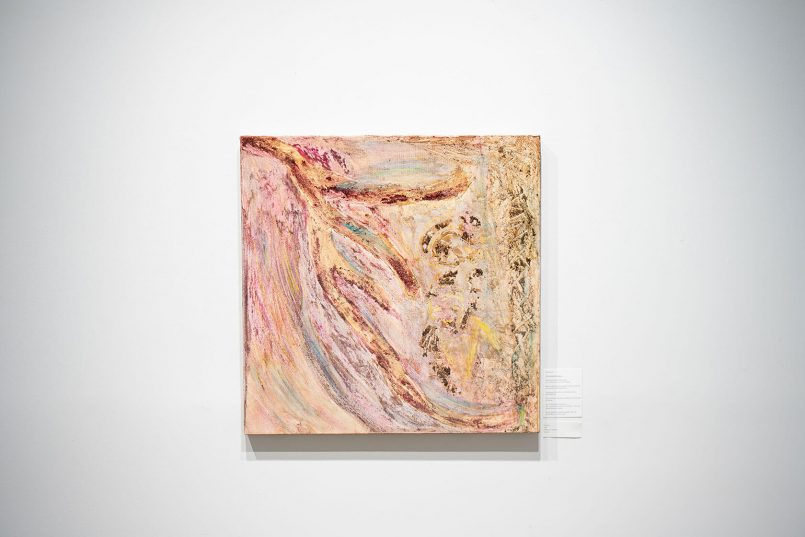
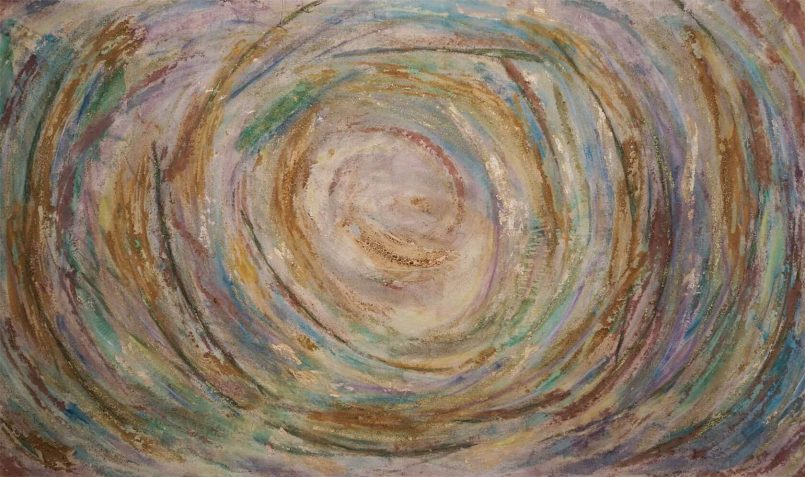
Kasia: When I say each painting is a portal or presence, I mean it holds a frequency that’s alive. I don’t approach the work as something I’m making—I approach it as something I’m meeting. The process feels less like creating and more like uncovering, as if the painting already exists in the unseen and I’m in conversation with it.
The materials I use—coffee, wine, earth pigments, vibrational water—aren’t passive. They carry memories. They know things. They guide me. Sometimes the paint moves in ways I didn’t expect, and that’s where the truth is. That’s the moment I recognize: it’s here. Something has arrived.
What emerges isn’t just an image—it’s a presence that invites the viewer into an inner space. A space of remembering, sensing, being. That’s the kind of art I’m devoted to: not decorative, but dimensional.
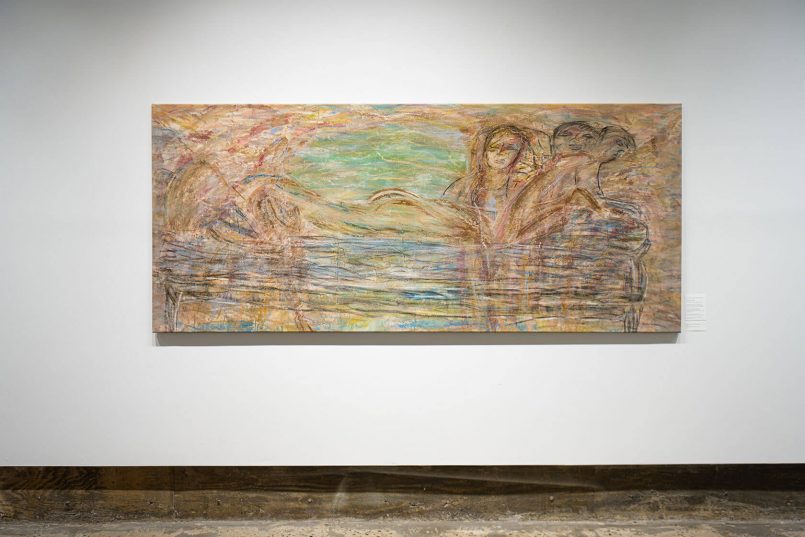
IG: The use of natural elements adds a ritualistic quality to your work. How do these materials shape the energy or intention of a piece?
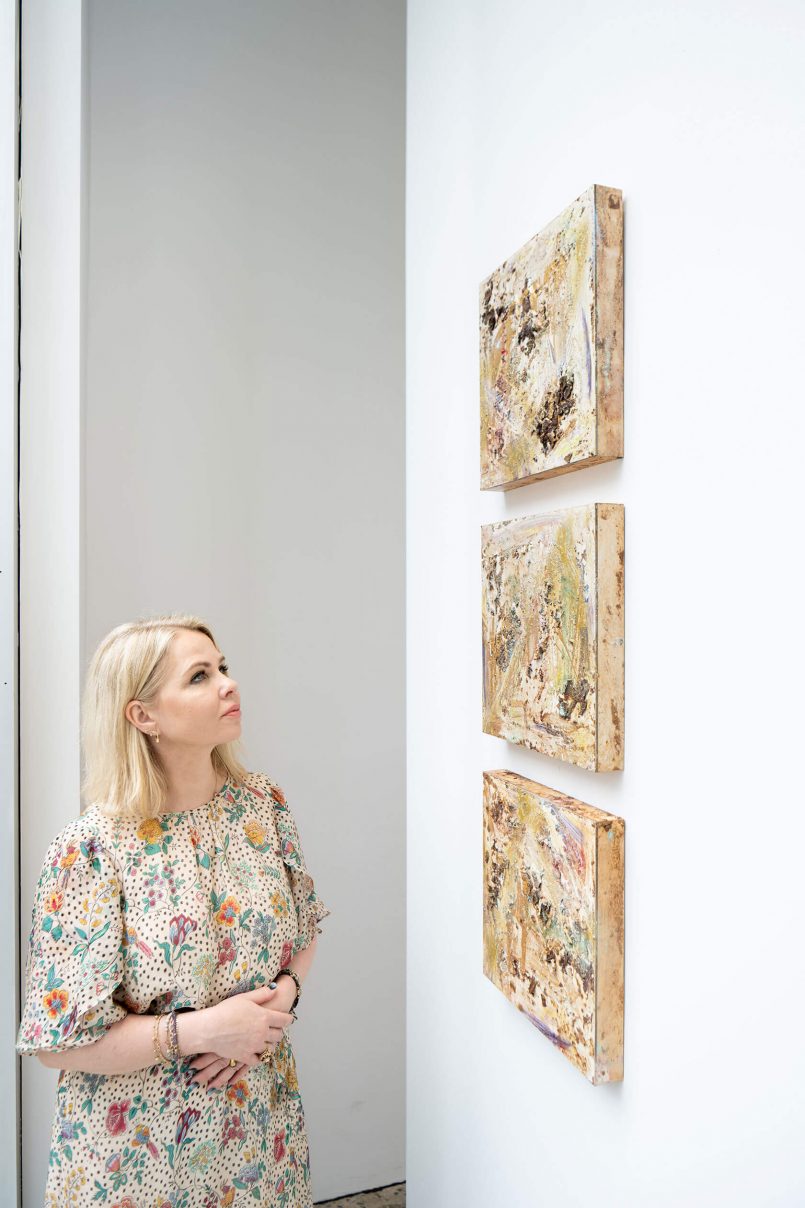
Kasia: These materials aren’t just aesthetic choices—they’re living collaborators. Wine, coffee, earth pigments, vibrational water—they all carry memory, frequency, and story. When I work with them, I’m entering into a kind of ritual—something ancient, intuitive, and rooted in relationships.
Each material brings its own energy. Coffee holds density and grounding. Wine carries a kind of blood-wisdom. Earth pigments connect me to place, to ancestry. Vibrational water—charged with sound or prayer—adds an unseen architecture that informs the whole piece.
Together, they shape the intention of the work not just visually, but energetically. The process becomes less about control and more about communion—an invitation for what wants to come through.
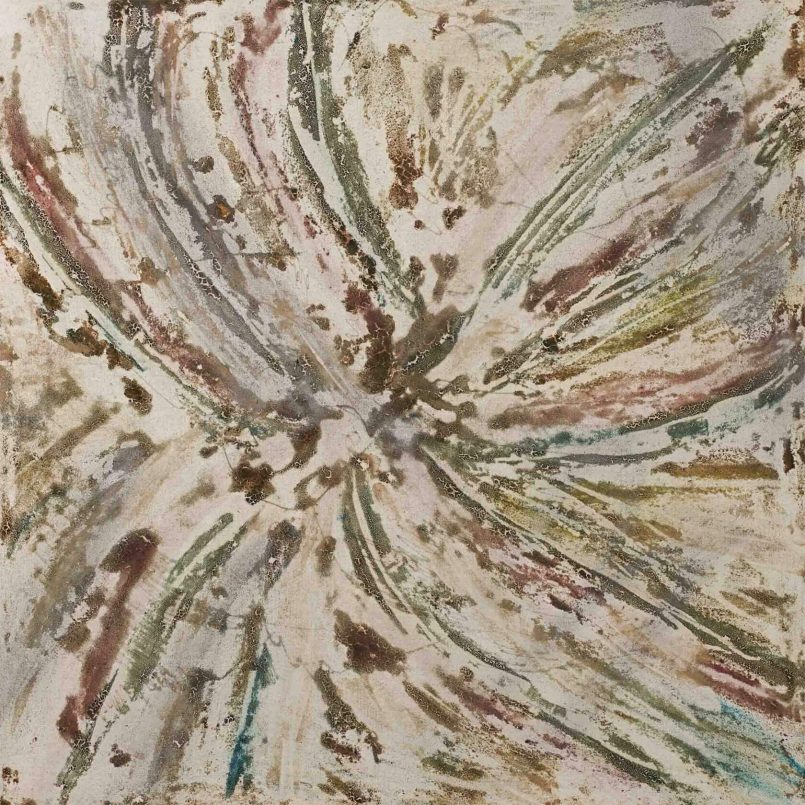
IG: Titles like Zero, Before First Breath, and 100 suggest a symbolic and numerical language running through the show. What role do numbers play in your creative and spiritual practice?
Kasia: Numbers, to me, are not tools of measurement—they’re a sacred language we’ve forgotten how to read. Each number holds a vibration, a memory, a stage of becoming. Titles like Zero, Before First Breath, and 100 mark symbolic thresholds in the human journey—not linearly, but archetypally.
Zero is the void, the womb of creation. It’s not empty—it’s whole. It holds the pulse before polarity, the presence before the story. And it’s where the deepest meeting can occur. To return to Zero is to meet without masks. Without history. It’s where the soul recognizes itself—in another, in the world, in the mirror.
But somewhere along the way, numbers were stripped of their poetry. Their mystery was flattened into quantity. Yet binary—the most basic digital language—is a spiritual code: 0 and 1, absence and presence, void and spark. It echoes the breath of creation. The inhale and the exhale. Life unfolding and returning.
In that sense, my work with numbers isn’t analytical—it’s devotional. It’s a way of listening to what still speaks in silence.
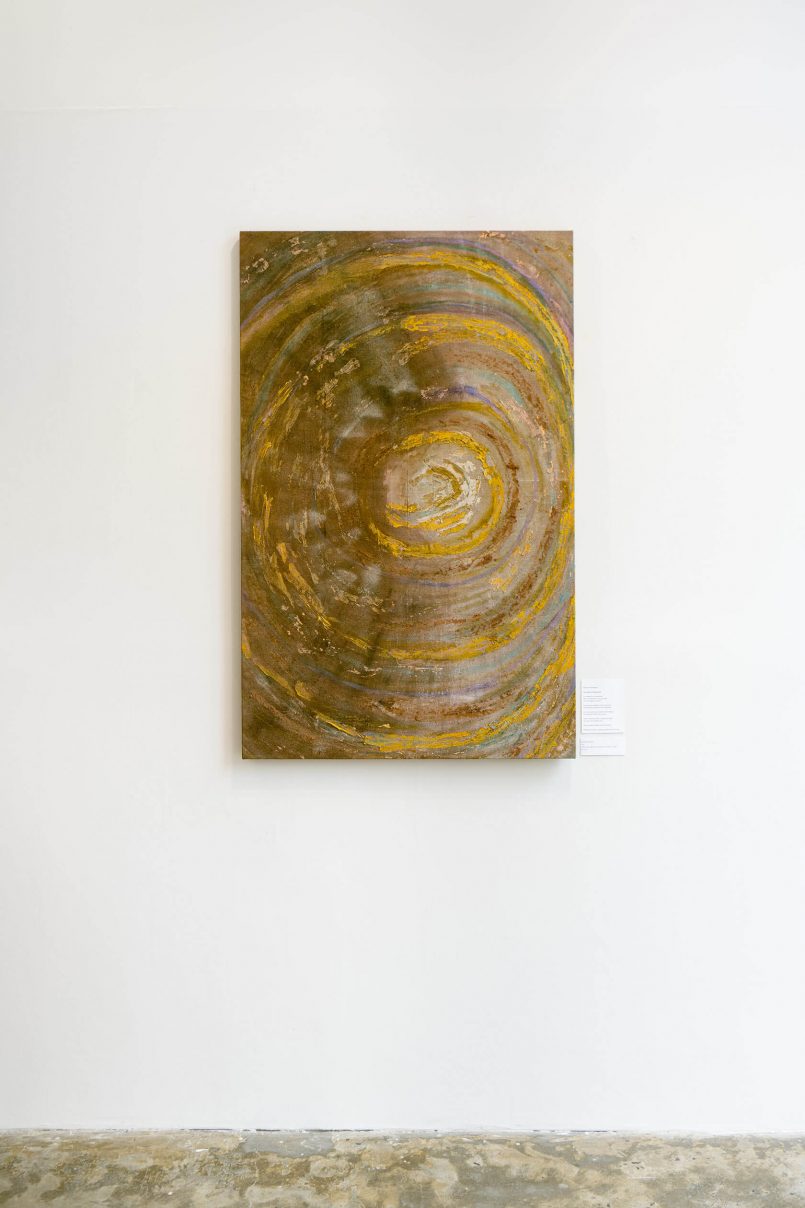
IG: You’ve said, “I don’t create these paintings—I uncover them.” That’s such a beautiful, powerful statement. Can you walk us through what that uncovering feels like, and how you know when a work is complete?
Kasia: Uncovering, for me, begins with presence. I don’t approach the canvas with a fixed idea—I begin with listening. There’s often a sense that something already exists in the unseen, and my role is to make it visible. Not by force, but by attunement.
The materials help guide that process. They speak their own language—wine bleeds, coffee stains, pigments settle. I follow their lead, responding more than directing. Sometimes I’m excavating an image that feels ancient, sometimes I’m tracing a vibration I can’t yet name.
The moment I know a piece is complete is usually quiet. It’s not about perfection—it’s about recognition. A sense that the painting is no longer asking anything of me. It’s arrived. And I’ve arrived with it.
At its core, this process is relational. I’m not the author—I’m in dialogue. And when the dialogue ends, what’s left is not just a painting, but a presence that now exists in the world.
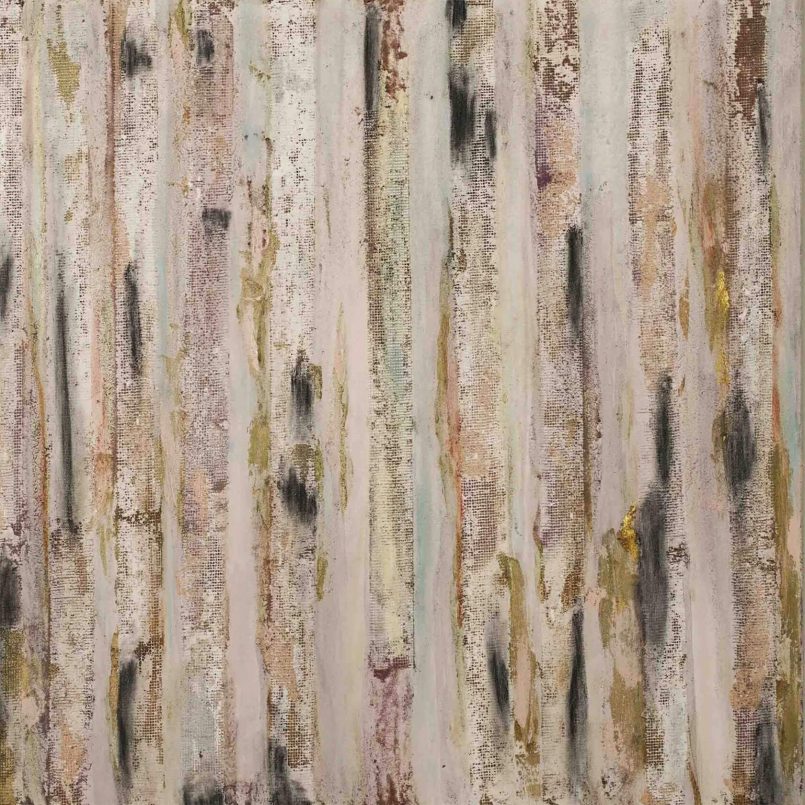
IG: Your work seems to dissolve boundaries, between self and other, matter and spirit, art and ritual. What do you hope viewers carry with them after experiencing your paintings?
Kasia: What I hope people carry with them is not a message, but a shift—a loosening of the boundaries they thought were real.
During my recent time in Africa, I was reminded again: there is no true separation. Life is death. Love is pain. Beauty carries grief. To fully live, we can’t deny the other half. My work holds that truth—not as a contradiction, but as wholeness.
The paintings become thresholds—living presences that invite the viewer into relationship: with themselves, with what’s been buried, with what’s sacred. There’s ritual in that. There’s grace. But ultimately, it’s a confrontation with perception.
Because in truth, there is no separation. Only the illusion of it—woven from memory, belief, and story. To truly grasp that is to wrestle with everything we think we know about life, and begin to see it not in fragments, but as one continuous field of being.
Through The Sacred Condition of Being, Kasia Muzyka offers more than a visual experience, she invites a reckoning with the unseen architecture of life. Her paintings, layered with ritual and symbolism, challenge the illusion of separation and encourage a deeper, quieter kind of remembering.
For Kasia, art is not simply something to be looked at, but something to be met; an encounter that lingers beyond the gallery walls. And in that meeting, she hopes, we might glimpse our own sacred condition of being.
To learn more about Kasia Muzyka and her work, visit her website and follow her latest updates on Instagram.







More
articles
Inspiration
in your inbox
Amazing art & design, never any spam.
We care about protecting your data. Please refer to our Privacy Policy for more.
- Advertising
- Architecture
- Art
- Branding
- Fashion & Beauty
- Gaming
- Graphic Design
- Illustration
- Industrial Design
- Interior Design
- Logo Design
- Packaging Design
- Photography
- Pop Culture
- Print Design
- Product Design
- Technology
- Typography
- UX & UI Design
- Vehicle Design
- Video & Motion
© 2026 Inspiration Grid, all rights reserved. Some of our posts may contain affiliate links to partner brands. We earn a small commission if you click the link and make a purchase. There is no extra cost to you, so it’s just a nice way to help support the site. All images, videos, and other content posted on the site is attributed to their creators and original sources. If you see something wrong here or you would like to have it removed, please contact us.