

Dubai Announces Plans for MODA, a First-of-Its-Kind Digital Art Museum
Published Aug 6, 2026
Dubai has announced plans for the Museum of Digital Art (MODA), a landmark addition to the city’s cultural landscape and the region’s first museum dedicated entirely to digital art and new technologies.
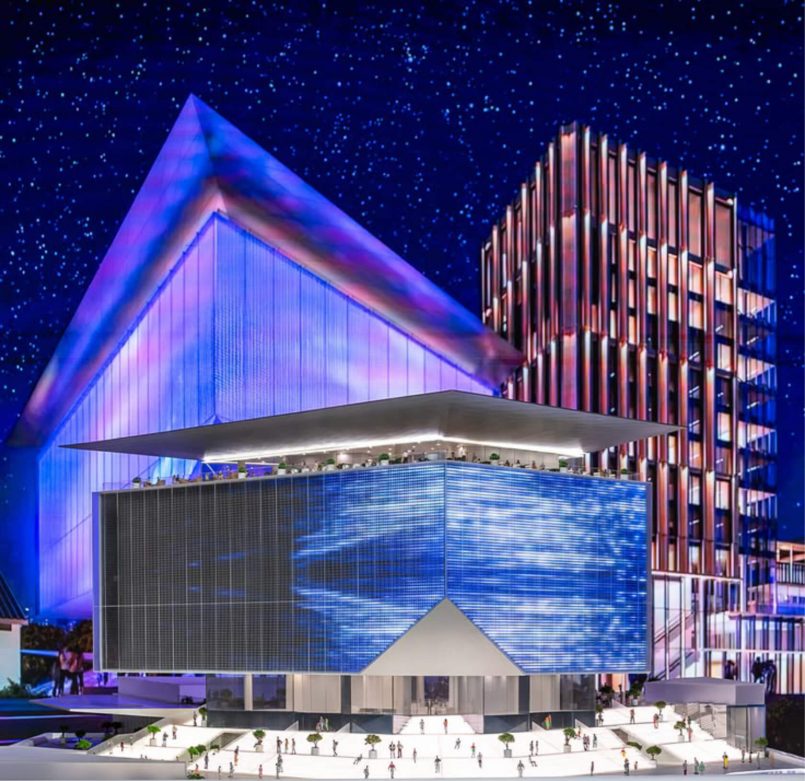
The five-floor institution, located within the expanding DIFC Zabeel District, represents a significant step in strengthening Dubai’s evolving museum sector and advancing its wider creative and cultural ecosystem.
The focus on immersive installations, interactive environments, generative works, research initiatives and educational programming built around emerging technologies, represents something significant for Dubai, it reflects a broader shift in how the art world is beginning to understand digital culture, not as a niche category but as a central part of contemporary artistic expression.
The Gulf’s New Cultural Competition
The announcement arrives during a period of intense cultural investment across the Gulf region. Saudi Arabia has launched major initiatives focused on new media and artificial intelligence, while Abu Dhabi recently opened large-scale immersive experiences such as teamLab Phenomena. Dubai’s MODA enters this increasingly competitive landscape as a statement of intent.
For decades, Western museums largely dictated the direction of contemporary art conversations. Increasingly, however, some of the most ambitious experimentation is happening elsewhere. The Gulf has become a testing ground for projects that merge architecture, technology, entertainment and cultural programming on a scale few traditional institutions can match.
Beyond the Traditional Museum Model
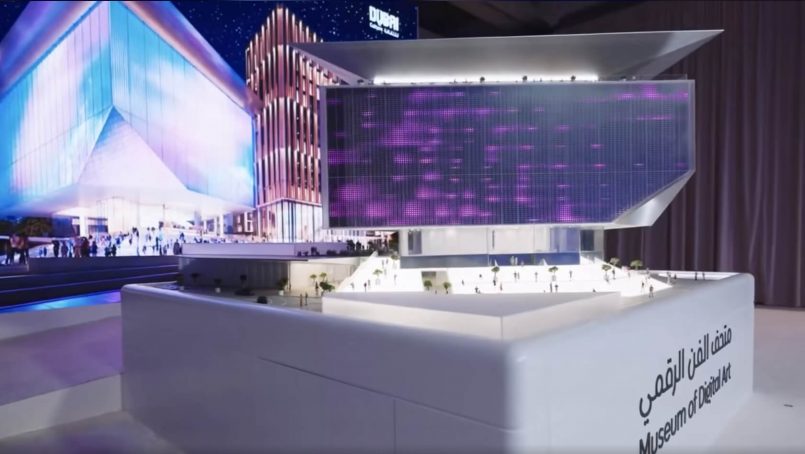
What makes the project stand out is that it appears less interested in replicating conventional museum formats. According to project details released so far, the museum will feature immersive exhibitions, interactive experiences, research spaces and collaborative environments designed for artists, technologists and emerging creative talent. The institution is also planning a digital twin, a virtual version of the museum that would allow global audiences to experience exhibitions remotely.
That approach acknowledges a reality many museums are still grappling with: digital art rarely exists comfortably within the framework developed for paintings and sculpture.
Some works respond to viewer movement. Others evolve through artificial intelligence, live data or audience participation. Many exist simultaneously across physical and virtual spaces. Preserving, exhibiting and collecting these works requires entirely different systems. Rather than forcing digital art into existing structures, MODA appears designed around the medium itself.
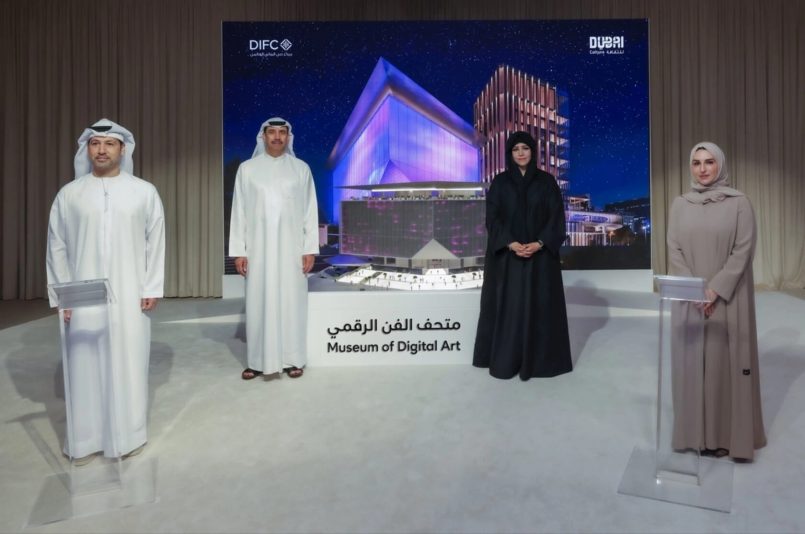
“Through projects like the Museum of Digital Art, we are contributing to a cultural landscape that is future-focused, globally connected, and grounded in creativity, knowledge exchange, and opportunity,”
Sheikha Latifa bint Mohammed Al Maktoum
Architecture for a Digital Future
The museum will be designed by Adrian Smith + Gordon Gill Architecture, the firm behind the Burj Khalifa. The choice feels fitting. Dubai has long understood architecture as both infrastructure and storytelling. Its skyline functions as a visual declaration of ambition, and cultural institutions increasingly play a similar role.
While detailed renderings remain limited, the project has been described as a flexible environment capable of supporting large-scale immersive experiences, temporary exhibitions and evolving technological formats.
That flexibility may prove essential. Unlike traditional galleries, digital art changes rapidly. Technologies that feel groundbreaking today can look outdated within a few years. Designing a museum for a medium that continuously reinvents itself presents challenges unlike almost any other cultural institution.
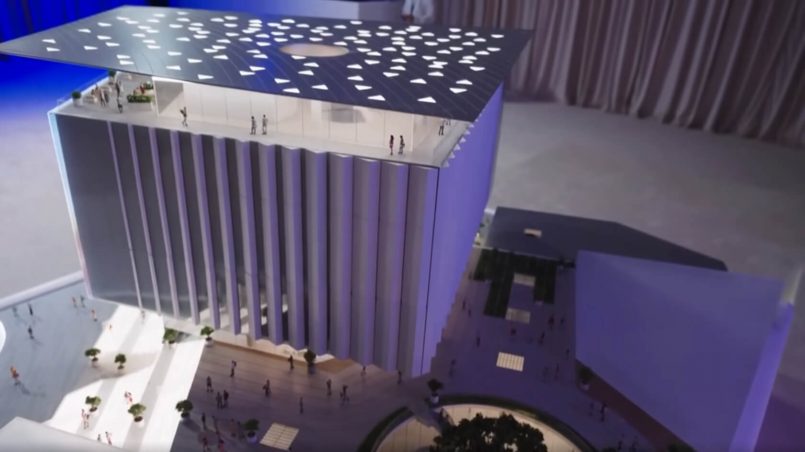
The significance of MODA extends beyond Dubai
The museum reflects a growing recognition that digital culture is no longer separate from contemporary culture. Artificial intelligence, virtual environments, interactive media and computational creativity are shaping how artists work, how audiences engage with art and how cultural experiences are distributed globally.
This shift has sparked ongoing debates throughout the art world. Critics question authorship in AI-generated works. Others worry about spectacle overtaking substance. Supporters argue that digital tools are simply the latest chapter in a long history of technological disruption, much like photography once challenged traditional painting.
Regardless of where one lands in those debates, institutions can no longer ignore them. The creation of a dedicated museum suggests that digital art has moved beyond trend status. It is becoming infrastructure.
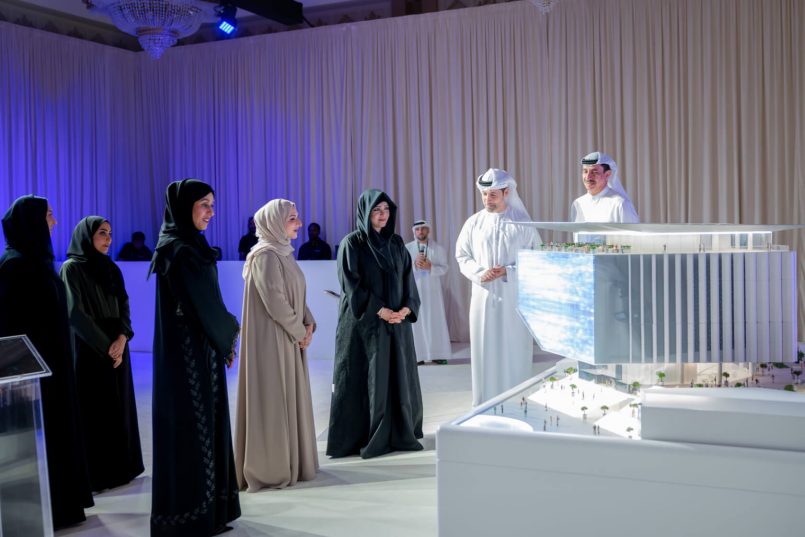
A Museum for the Next Generation
The most compelling aspect of the project is its emphasis on education and experimentation.
Museum audiences are changing. Younger visitors often engage with culture through screens, games, virtual worlds and interactive experiences before they ever step into a gallery. Their understanding of creativity is already shaped by digital environments.
MODA’s planned combination of exhibitions, research initiatives and collaborative spaces acknowledges that reality. Instead of presenting technology as an accessory to art, it treats technology as one of the primary creative languages of the present moment.
Whether the museum ultimately succeeds will depend on the quality of its programming, artists and curatorial vision. Immersive experiences alone are not enough. The challenge will be creating meaningful cultural conversations as oppose to simply delivering visual spectacle. Still, the announcement marks an important moment.
For a medium that spent years fighting for legitimacy, the arrival of a purpose-built Museum of Digital Art feels confirmation that digital art has officially entered the cultural mainstream. And fittingly, one of the world’s most future-focused cities is the place where that future is displayed.
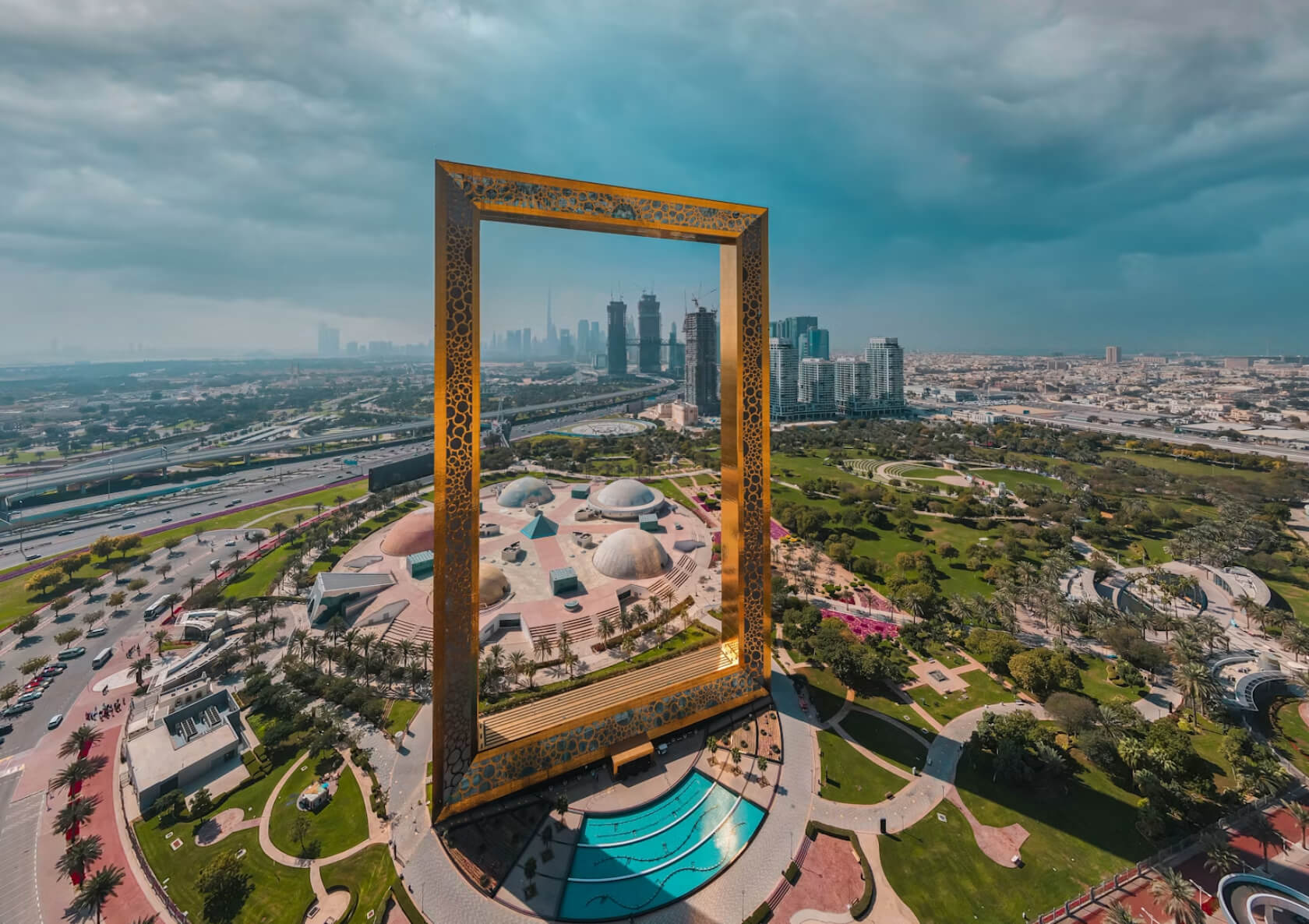
Cover photo by Ahmed Aldaie.
Other photos courtesy of Dubai Media Office.





More
articles
Inspiration
in your inbox
Amazing art & design, never any spam.
We care about protecting your data. Please refer to our Privacy Policy for more.

- Advertising
- Architecture
- Art
- Branding
- Fashion & Beauty
- Gaming
- Graphic Design
- Illustration
- Industrial Design
- Interior Design
- Logo Design
- Packaging Design
- Photography
- Pop Culture
- Print Design
- Product Design
- Technology
- Typography
- UX & UI Design
- Vehicle Design
- Video & Motion
© 2026 Inspiration Grid, all rights reserved. Some of our posts may contain affiliate links to partner brands. We earn a small commission if you click the link and make a purchase. There is no extra cost to you, so it’s just a nice way to help support the site. All images, videos, and other content posted on the site is attributed to their creators and original sources. If you see something wrong here or you would like to have it removed, please contact us.