

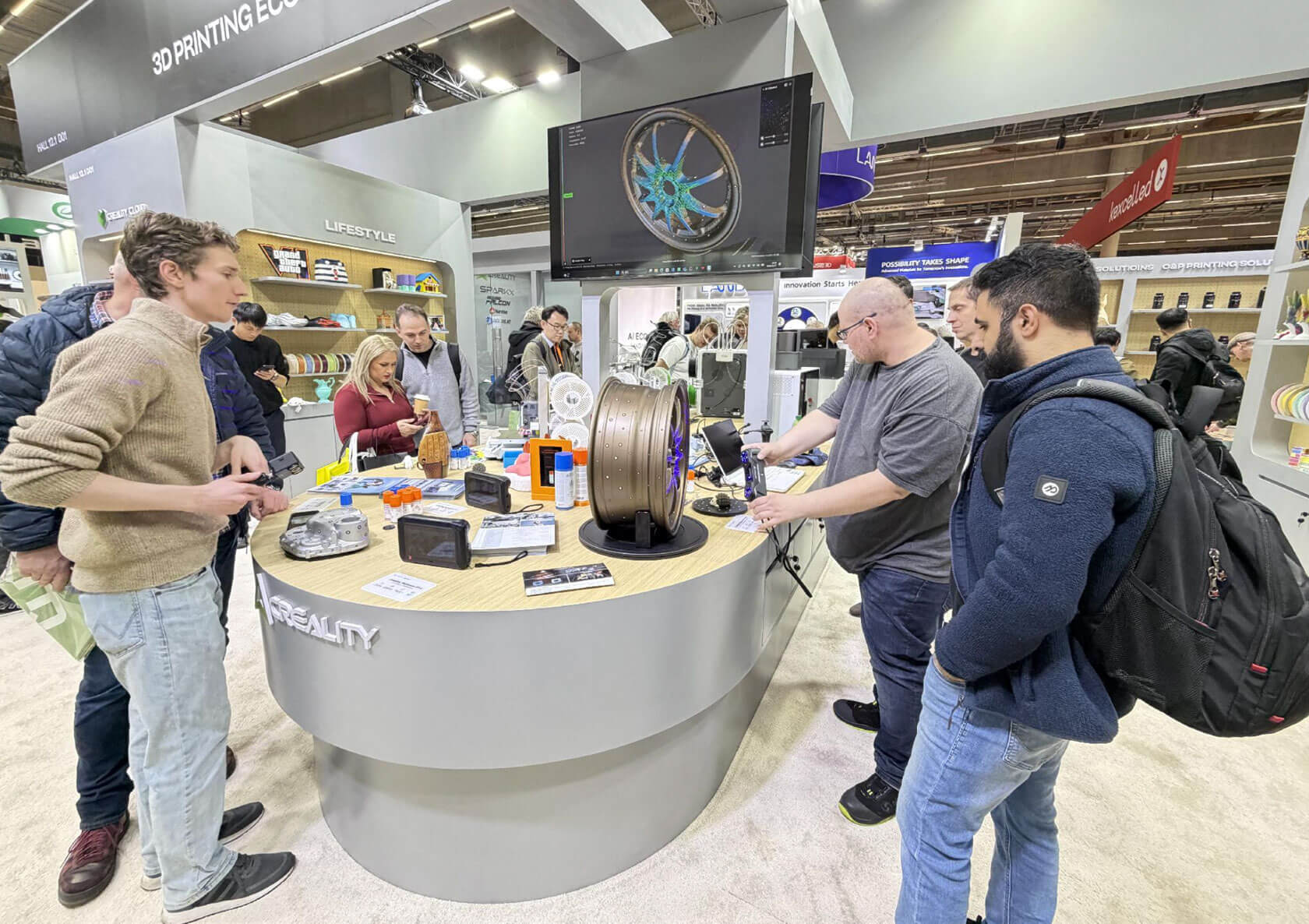
From Physical to Digital and Back: Creality Showcases Its 3D Scanning Ecosystem at Formnext
Published Nov 26, 2026
Includes affiliate content
Creality recently showcased its growing range of 3D scanning technologies at Formnext 2026 in Frankfurt, highlighting new possibilities for designers, makers and creative professionals.
The ability to turn real-world objects into detailed digital models opens up some fascinating avenues for creative experimentation, from reproducing intricate sculptures and customizing collectibles to restoring vintage objects and developing new products based on existing physical designs.
At this year’s Formnext exhibition, Creality demoed three different 3D scanners designed to accommodate a wide range of applications and experience levels.
The recently launched Raptor Pro Max is a high-performance handheld scanner designed for everything from capturing fine details on smaller objects to digitizing large automotive components. The Sermoon P1S takes a more self-contained approach, featuring a built-in 6-inch touchscreen that allows users to scan, process and export 3D models without a connected computer. At the more accessible end of the spectrum, the pocket-sized Creality Pika weighs just 260 grams and incorporates AI-powered tools to simplify the process of refining digital models.
Beyond the hardware itself, Creality is also working to connect the different stages of the digital manufacturing process. The company’s growing software ecosystem includes Creality Scan for capturing and processing 3D models, Creality Inspect for dimensional analysis and Creality Print for preparing those models for physical production.
As part of its Formnext showcase, Creality also announced a global strategic partnership with Geomagic, a specialist in 3D design, reverse engineering and inspection software. The collaboration aims to better integrate Creality’s scanning hardware with professional software workflows, giving users more flexibility when working with complex physical objects and digital models.

The prospect of being able to capture, modify and reproduce physical objects with increasingly accessible tools is particularly exciting. Combining 3D scanning with 3D printing adds another dimension to the creative process, where existing objects can become the starting point for entirely new creations.
We’ll be exploring some of these possibilities ourselves over the coming weeks, with a dedicated hands-on review of the Creality Raptor Pro Max.
In the meantime, you can learn more about Creality’s latest 3D scanning technologies on their official website.
This post contains affiliate links to partner brands. We earn a small commission if you click the link and make a purchase. There is no extra cost to you, so it’s just a nice way to help support the site.









More
articles
Inspiration
in your inbox
Amazing art & design, never any spam.
We care about protecting your data. Please refer to our Privacy Policy for more.
- Advertising
- Architecture
- Art
- Branding
- Fashion & Beauty
- Gaming
- Graphic Design
- Illustration
- Industrial Design
- Interior Design
- Logo Design
- Packaging Design
- Photography
- Pop Culture
- Print Design
- Product Design
- Technology
- Typography
- UX & UI Design
- Vehicle Design
- Video & Motion
© 2026 Inspiration Grid, all rights reserved. Some of our posts may contain affiliate links to partner brands. We earn a small commission if you click the link and make a purchase. There is no extra cost to you, so it’s just a nice way to help support the site. All images, videos, and other content posted on the site is attributed to their creators and original sources. If you see something wrong here or you would like to have it removed, please contact us.